
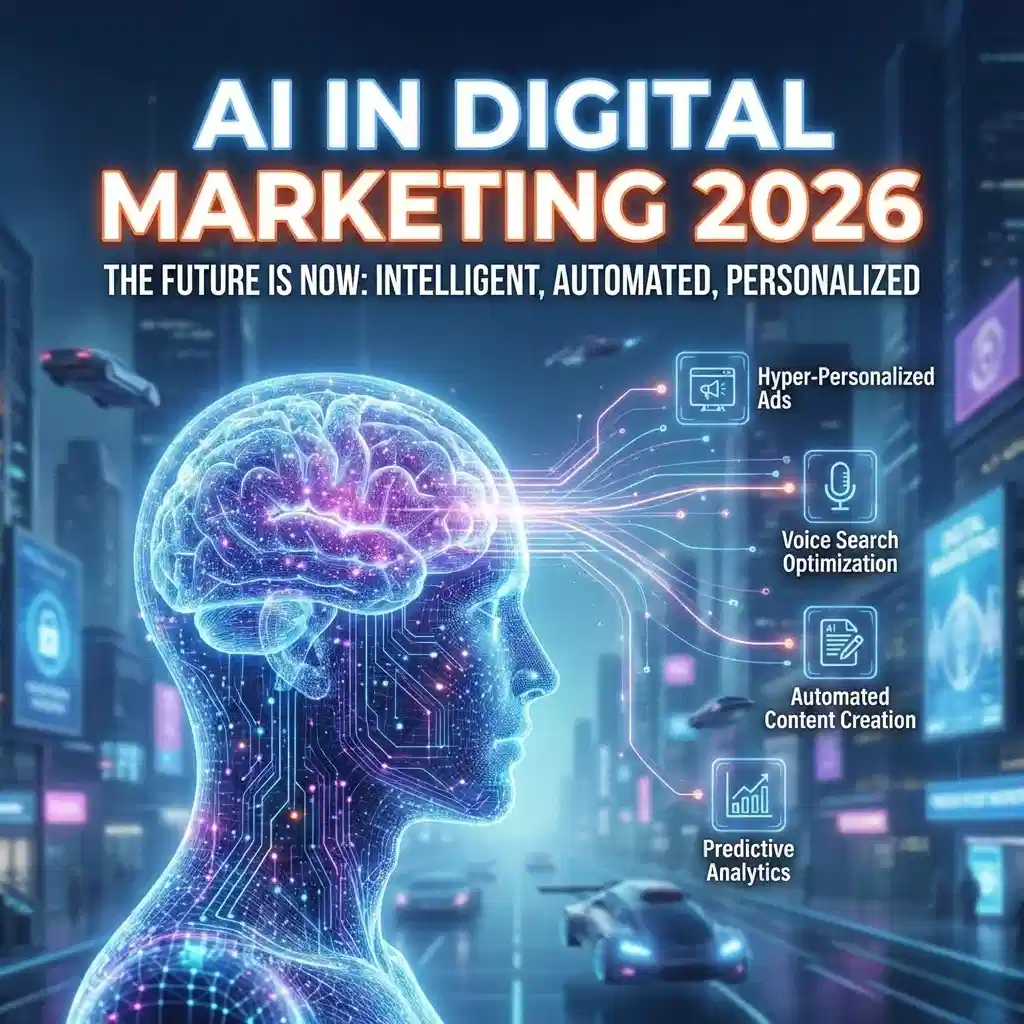
How AI Is Changing Digital Marketing in 2026 ?
Artificial Intelligence has completely reshaped digital marketing by 2026. What once felt like an advanced technology reserved for big companies is now accessible to freelancers, freshers, startups, and small businesses. AI is no longer just a supporting tool—it has become the foundation of modern digital marketing strategies.
From content creation and SEO to paid advertising and social media management, AI is influencing every stage of the marketing funnel. Businesses that understand and adopt AI are growing faster, while those ignoring it are struggling to compete. This is why the topic of AI in digital marketing has become one of the most searched and discussed subjects in recent years.
In this blog, we’ll explore how AI is changing digital marketing in 2026, which tools marketers are using, the skills required to stay relevant, and real-world examples that show AI’s impact in action.
The Rise of AI in Digital Marketing
Digital marketing has always relied on data, but AI has taken data usage to a whole new level. Instead of manually analyzing reports and guessing what might work, AI systems now analyze massive amounts of data in seconds and provide actionable insights.
In 2026, AI helps marketers understand user behavior more deeply than ever before. It predicts what users want, when they are most likely to convert, and which marketing message will work best. This has made marketing more personalized, efficient, and results-driven.The future of digital marketing is no longer about working harder—it’s about working smarter with AI.
How AI Is Transforming SEO in 2026
SEO has changed dramatically with the rise of AI-powered search engines and tools. Ranking on Google is no longer about stuffing keywords or writing content just for bots. Search engines now understand context, intent, and content quality much better.
AI tools help marketers research keywords based on search intent rather than just search volume. Instead of focusing only on “what people search,” AI analyzes “why people search.” This allows marketers to create content that genuinely answers user questions, which leads to better rankings and higher engagement.
Content creation has also evolved. AI assists marketers in drafting blog content, improving readability, optimizing headings, and suggesting internal links. However, in 2026, Google prioritizes originality and usefulness. Marketers who combine AI assistance with human creativity see the best SEO results. Technical SEO has become easier as well. AI tools automatically detect site issues like broken links, slow page speed, indexing errors, and mobile usability problems. This allows even beginners to maintain SEO-friendly websites without deep technical knowledge.
AI in Social Media Marketing and Automation
Social media marketing has become nearly impossible to manage manually without AI, especially for brands active on multiple platforms. In 2026, AI plays a major role in content planning, posting, engagement, and customer communication. AI tools analyze audience behavior to suggest the best posting times and content formats. They help marketers write captions, generate hashtag ideas, and even suggest trending topics relevant to a brand’s niche.
Short-form video content has also benefited from AI. AI-powered tools help generate reel ideas, write video scripts, and optimize content for maximum engagement. This allows creators and businesses to stay consistent without burnout. Customer interaction has improved through AI chatbots. Businesses now use AI-powered bots to respond instantly to queries on platforms like Instagram, WhatsApp, and websites. These bots handle common questions, qualify leads, and even book appointments, improving customer experience while saving time.
Popular AI Marketing Tools Used in 2026
By 2026, AI marketing tools have become more affordable and user-friendly. Content creation tools help with blogs, ads, emails, and website copy. SEO tools powered by AI assist with keyword research, content optimization, and performance tracking. Advertising tools use AI for campaign automation, creative testing, and audience targeting. Social media tools rely on AI for scheduling, analytics, and content recommendations. Analytics platforms use AI to predict trends and track user behavior more accurately. Most of these tools offer free plans or trials, making them accessible even for beginners and freelancers.
Skills Digital Marketers Must Learn in the AI Era
While AI tools are powerful, tools alone are not enough. In 2026, digital marketers must develop skills that allow them to work effectively with AI. Understanding how AI tools function and how to use them strategically is essential. Marketers don’t need to build AI systems, but they must know how to select the right tools and apply them correctly. Prompt writing has become an important skill. The quality of AI output depends heavily on the instructions given. Marketers who can write clear and detailed prompts get better results from AI tools. Data interpretation is another critical skill. AI provides insights, but humans must analyze them, make decisions, and adjust strategies. Creativity, storytelling, and emotional intelligence remain human strengths that AI cannot fully replace.
Ethical AI usage is also important. Responsible handling of data, originality in content, and transparency help build trust with audiences and clients.I to predict trends and track user behavior more accurately. Most of these tools offer free plans or trials, making them accessible even for beginners and freelancers.
Real-World Use Cases of AI in Digital Marketing
Small businesses are using AI to compete with larger brands. Local service providers run AI-optimized ads to reach nearby customers, improving visibility without large marketing budgets.Freelancers use AI to scale their work. Tasks like proposal writing, content creation, reporting, and research are done faster, allowing them to manage more clients efficiently.
E-commerce brands rely on AI for SEO optimization, personalized product recommendations, and predictive analytics. This results in better user experience, higher conversions, and increased revenue. These examples show that AI is not just for big companies—it’s a growth tool for everyone.
The Future of Digital Marketing Beyond 2026
The future of digital marketing will be deeply integrated with AI. Voice search, personalization, automation, and predictive marketing will continue to grow. However, human creativity, strategy, and decision-making will remain essential.
AI will handle execution, while marketers focus on vision, branding, and innovation.